Nuisance RCD Tripping After
New Induction Hob — Long Ditton
A homeowner in Long Ditton had a brand-new induction hob installed — and almost immediately their RCD started tripping, cutting power to six circuits at once. Brad was called in to diagnose and fix the problem.
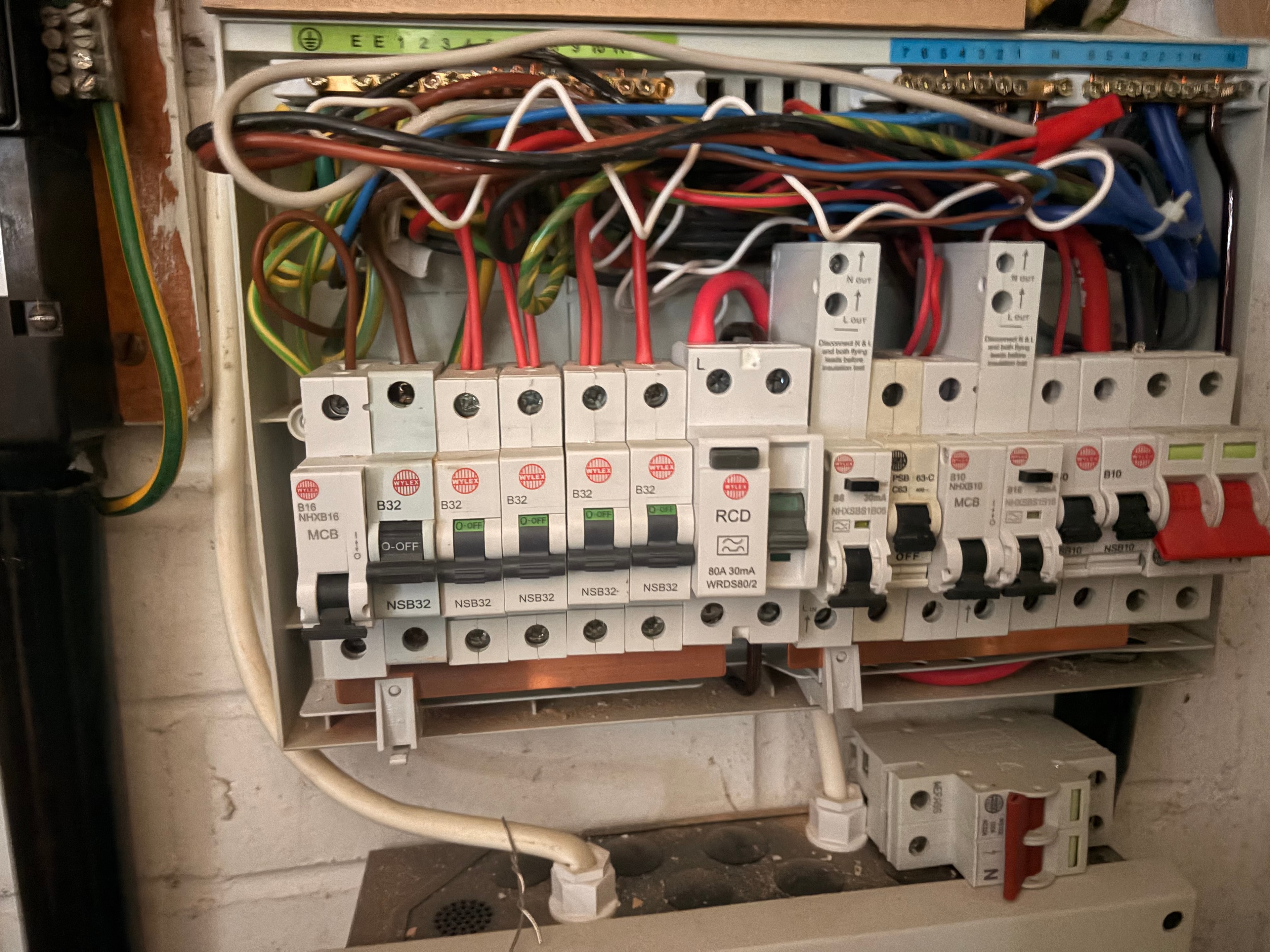
Before — original consumer unit
The Problem
The client had recently had a new induction hob connected. Shortly after, their RCD began tripping — sometimes mid-cook, sometimes when other appliances were in use. Because the old consumer unit used a single 80A 30mA RCD to protect six circuits, every trip killed power to the whole house simultaneously: kitchen, sockets, lights, garage heaters, the lot.
Modern induction hobs — and many other new appliances — produce a small amount of earth leakage current by design. This is normal and within manufacturer tolerances, but it can push a shared RCD over its 30mA trip threshold when combined with the background leakage from other circuits on the same device.
The Diagnosis
Brad attended and carried out a systematic fault-finding process:
- Checked the circuit — confirmed the hob wiring itself was correct and the installation was sound.
- Changed the fuse (MCB) on the cooker circuit — tripping continued, ruling out a faulty breaker.
- Changed the main RCD — still tripping, confirming the issue was earth leakage rather than a faulty device.
- Measured earth leakage across the circuits — the kitchen ring final circuit was contributing leakage above what the shared RCD could tolerate alongside the new hob.
The Fix — Consumer Unit Reconfiguration
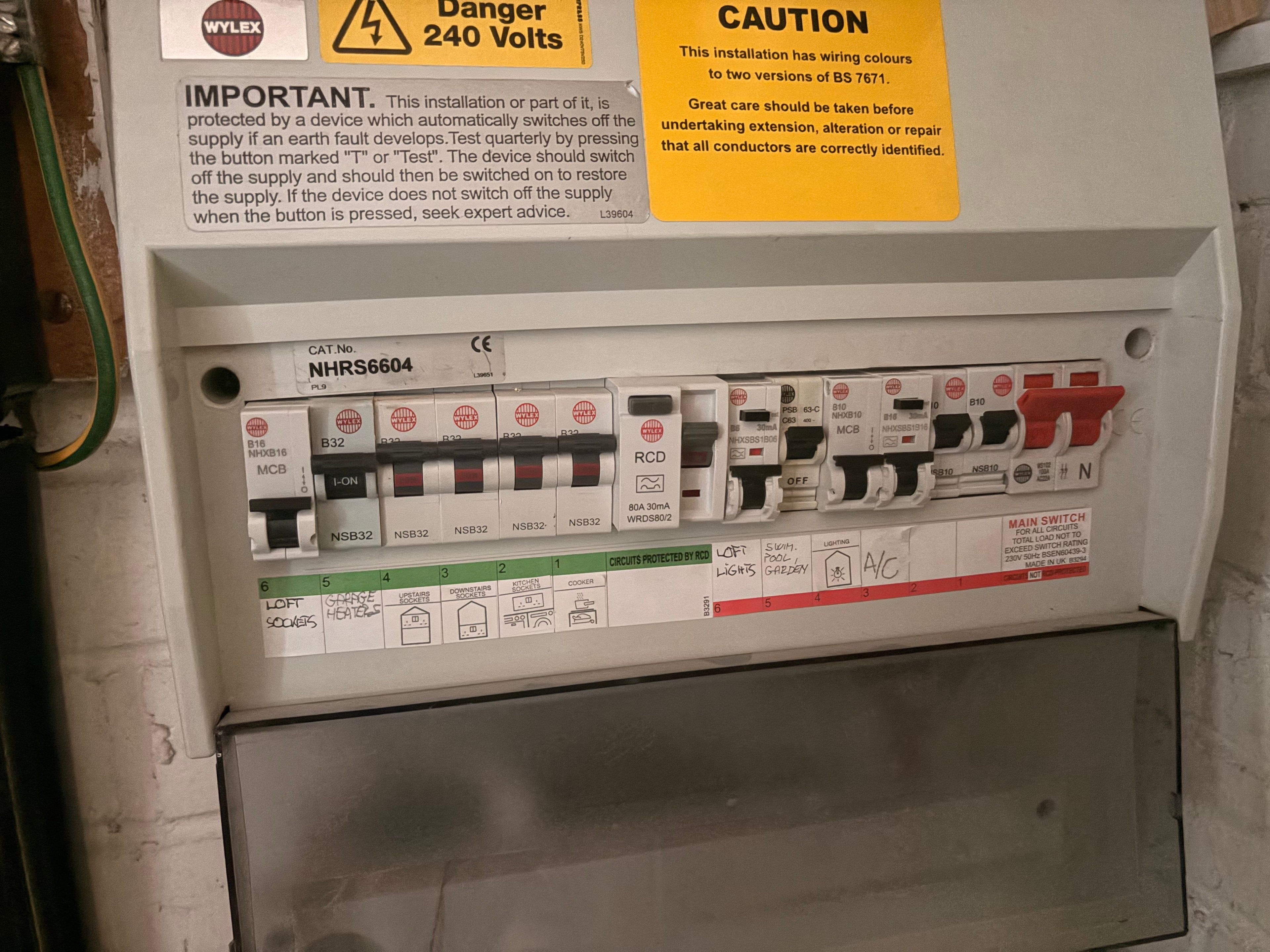
The solution was to reconfigure the consumer unit so the kitchen ring final circuit had its own dedicated RCBO (Residual Current Breaker with Overcurrent protection). This meant:
- The kitchen circuit was isolated from the shared RCD — its leakage no longer contributed to the combined total.
- An A-type RCBO was fitted for the kitchen ring. A-type devices are specifically recommended for circuits supplying modern appliances (induction hobs, inverter-driven equipment, EV chargers) because they detect both AC and pulsating DC fault currents — the type produced by modern electronics.
- The remaining circuits stayed on the main RCD, but with the kitchen leakage removed the combined earth leakage dropped well within the 30mA threshold.
The result: tripping stopped immediately. The hob has worked without issue since.
After — reconfigured with dedicated A-type RCBO for kitchen circuit
Why This Matters for Homeowners
Nuisance tripping is one of the most common call-outs after a new appliance is installed. It's not a fault with the appliance — it's a compatibility issue between modern electronics and older consumer unit designs that weren't built with today's leakage levels in mind.
The fix is straightforward for a qualified electrician, but it does require proper diagnosis first. Swapping the RCD alone (as some electricians try) won't solve it if the root cause is cumulative leakage across multiple circuits.