
Flashing Bathroom Lights — Faulty Recessed PIR Sensor Diagnosed & Fixed, Weybridge
A Weybridge homeowner called first thing in the morning with bathroom lights that had started flashing. Brad Neil Electrical was there the same day. The fault was exactly what it looked like — a failing recessed PIR mood lighting sensor — diagnosed on arrival and sorted in a single visit.
"Literally perfect experience start to finish. Brad was with us same day and fixed our electrical issue with no problems. Will 100% only use Brad in future."
The Call
The customer called in the morning — bathroom lights had started flashing and they wanted it looked at. Flashing lights in a bathroom can mean a few different things: a loose connection, a failing driver in an LED fitting, a dimmer that's incompatible with the bulbs, or a fault in a sensor or controller if the circuit has one. The description and the setup pointed fairly clearly in one direction before Brad even arrived.
The bathroom had a recessed PIR sensor as part of a mood lighting setup — the type that detects movement and adjusts the lighting level automatically, giving a softer light when the room is occupied rather than full brightness at all times. These sensors have internal electronics that can degrade over time, and a failing sensor will often cause the lights it controls to flicker or flash before it gives up entirely.
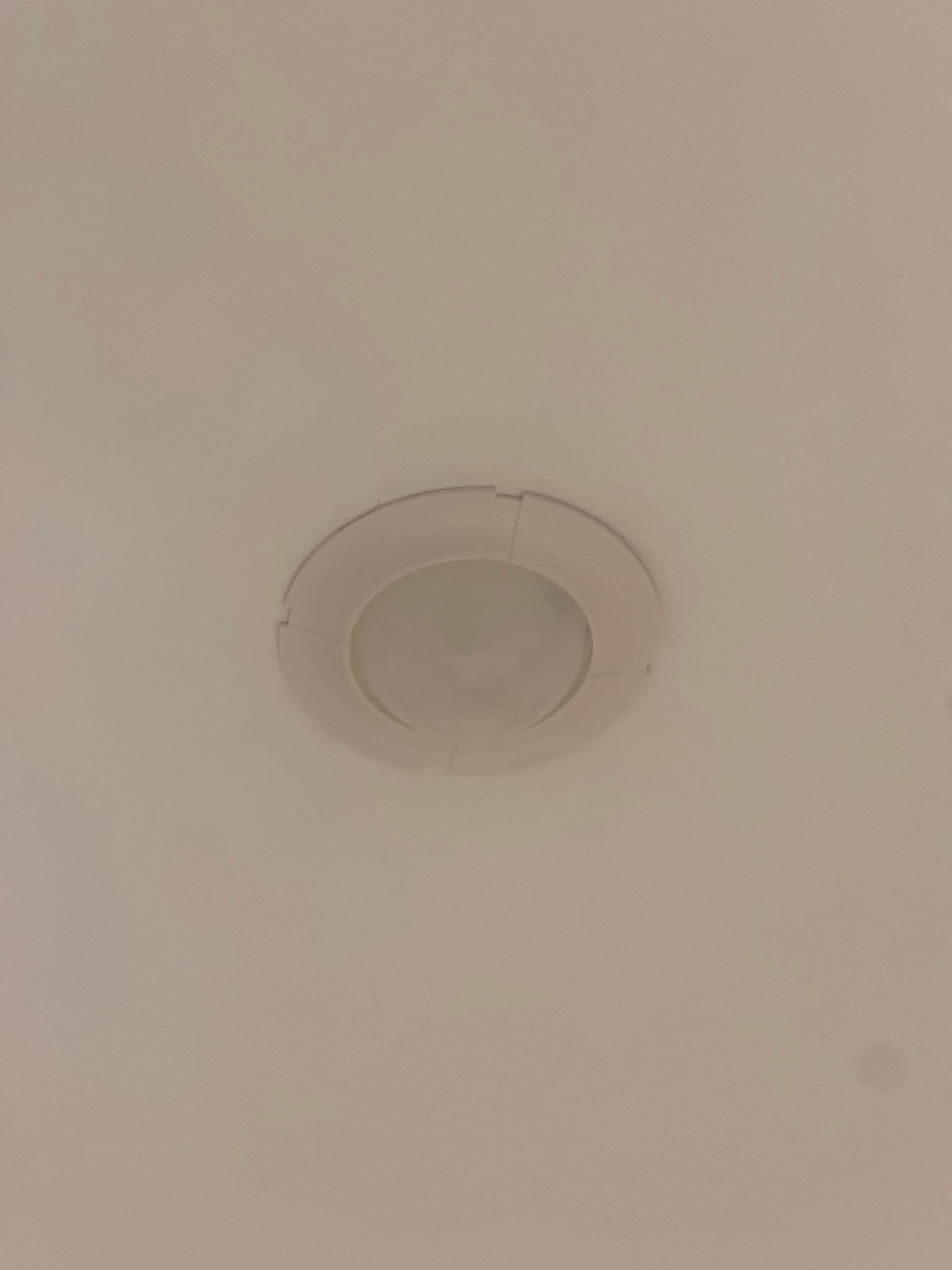
The recessed PIR mood lighting sensor in the bathroom ceiling — the source of the fault. The internal electronics had degraded, causing the lights it controlled to flash intermittently.
The Diagnosis
On arrival, the setup confirmed what the call had suggested. The bathroom had a recessed PIR sensor controlling the mood lighting circuit — a neat, flush-mounted unit in the ceiling that blends in with the downlights. The lights on that circuit were flashing; the rest of the bathroom lighting was fine.
Isolating the sensor from the circuit confirmed the fault immediately — with the sensor bypassed, the lights ran cleanly with no flicker. The sensor itself was the problem. The internal components had degraded to the point where it was no longer regulating the circuit correctly, causing the instability in the lights it controlled.
This is a common failure mode for recessed PIR and presence detection sensors, particularly in bathrooms where the combination of steam, temperature fluctuation and years of use takes a toll on the electronics inside. The fix was straightforward: remove the faulty sensor and replace it with a new like-for-like unit.
The Fix
The faulty PIR sensor was removed and replaced with a new unit — same type, same specification, correctly rated for the bathroom zone it sits in. The replacement was wired in, the circuit tested, and the mood lighting confirmed working correctly before leaving.
The whole job — travel, diagnosis and replacement — was completed in a single same-day visit. The customer had working bathroom lights again by the afternoon and left a five-star review within the hour.
It's a good example of a fault that looks alarming — flashing lights in a bathroom — but has a clean, straightforward cause once you know what you're looking at. Getting the right person in quickly means it doesn't drag on or turn into something more disruptive.
Job Summary
Location
Weybridge, Surrey
Reported fault
Flashing bathroom lights
Root cause
Faulty recessed PIR mood lighting sensor
Fix
Sensor removed and replaced like-for-like
Response
Same-day callout
Visits
Single visit — diagnosed and fixed same day
Customer verdict
5 stars — Georgie Leader, Google Reviews
Why a PIR Sensor Can Cause Lights to Flash
Recessed PIR and presence detection sensors are more than just switches — they contain electronics that regulate the circuit they control. When those electronics start to fail, the symptoms often show up in the lights before the sensor stops working altogether:
Degraded internal components — the capacitors and control circuitry inside a PIR sensor have a finite lifespan. As they age, they lose the ability to regulate the circuit cleanly, causing flickering or flashing in the lights they control.
Moisture damage — bathrooms are a harsh environment for electronics. Steam and condensation penetrate the sensor housing over time, accelerating corrosion of the internal components.
Incompatibility with LED replacements — if the original bulbs on the circuit have been replaced with LEDs since the sensor was installed, the sensor may not be rated for the lower load. This can cause flickering even with a sensor that is otherwise functional.
Sensitivity drift — a PIR sensor that has drifted out of calibration may trigger and release repeatedly in quick succession, causing the lights to flash as the circuit switches on and off.
The fix is usually straightforward — once the sensor is confirmed as the source of the fault, replacement with a correctly rated unit resolves it cleanly. There is rarely any damage to the rest of the circuit.
Same-Day Callouts Available
Lights Playing Up?
Brad Neil Electrical covers Weybridge and the surrounding Surrey area. If something's not right, get in touch — same-day visits available for fault finding.