Solar Not Charging 12V System — Faulty Isolator Switch Diagnosed & Replaced, Thames Ditton Marina
A boat owner moored at Thames Ditton marina noticed their solar panels had stopped getting power through to the 12V system. Shoreline power was working fine — the fault was elsewhere. Brad Neil Electrical was called in to find it. The culprit turned out to be a faulty battery isolator switch: diagnosed, removed and replaced in a single visit.
The Call
The boat owner had noticed that despite the solar panels being in place and the sun doing its job, nothing was getting through to the 12V system. The batteries weren't charging from solar at all. Shoreline power — the mains connection from the marina pontoon — was working normally, so the boat's 240V systems were fine. The problem was isolated to the 12V DC side.
On a boat, the 12V system powers the essentials: lighting, navigation instruments, bilge pumps, the VHF radio, and anything else that runs off the battery bank. If solar isn't feeding into it, the batteries drain and eventually those systems stop working — not something you want to discover when you need them.
Brad Neil Electrical was called to the marina to find the fault and get the solar charging working again.
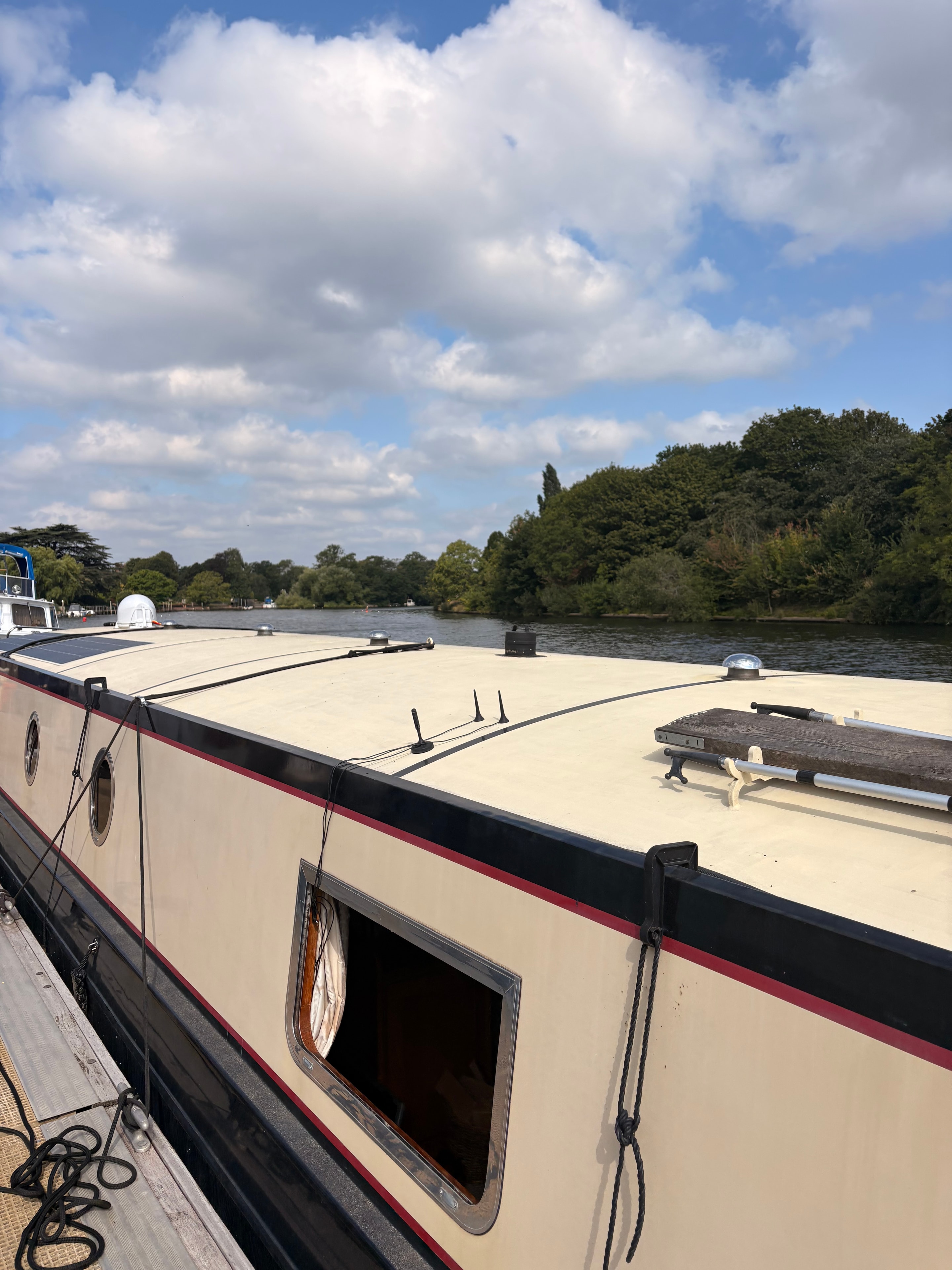
The boat moored at Thames Ditton marina. A lovely spot to work — though the electrical compartments are a different story.
Finding the Fault
The solar panels themselves were fine — they were generating voltage as expected. The solar charge controller was also functioning correctly. The issue was between the controller and the battery bank: the solar output was being blocked before it could reach the batteries.
Tracing the circuit through the battery compartment, the fault was found at the battery isolator switch — a rotary switch that sits in the main DC circuit and allows the battery bank to be isolated from the rest of the electrical system. This one had failed internally. It was passing current in some positions but not others, and was no longer making a reliable connection in the solar charging path.
Isolator switches on boats take a lot of punishment — vibration, moisture, temperature swings, and years of use all take their toll. A switch that looks fine from the outside can have corroded or worn contacts inside that cause intermittent or complete failure. This one had given up.
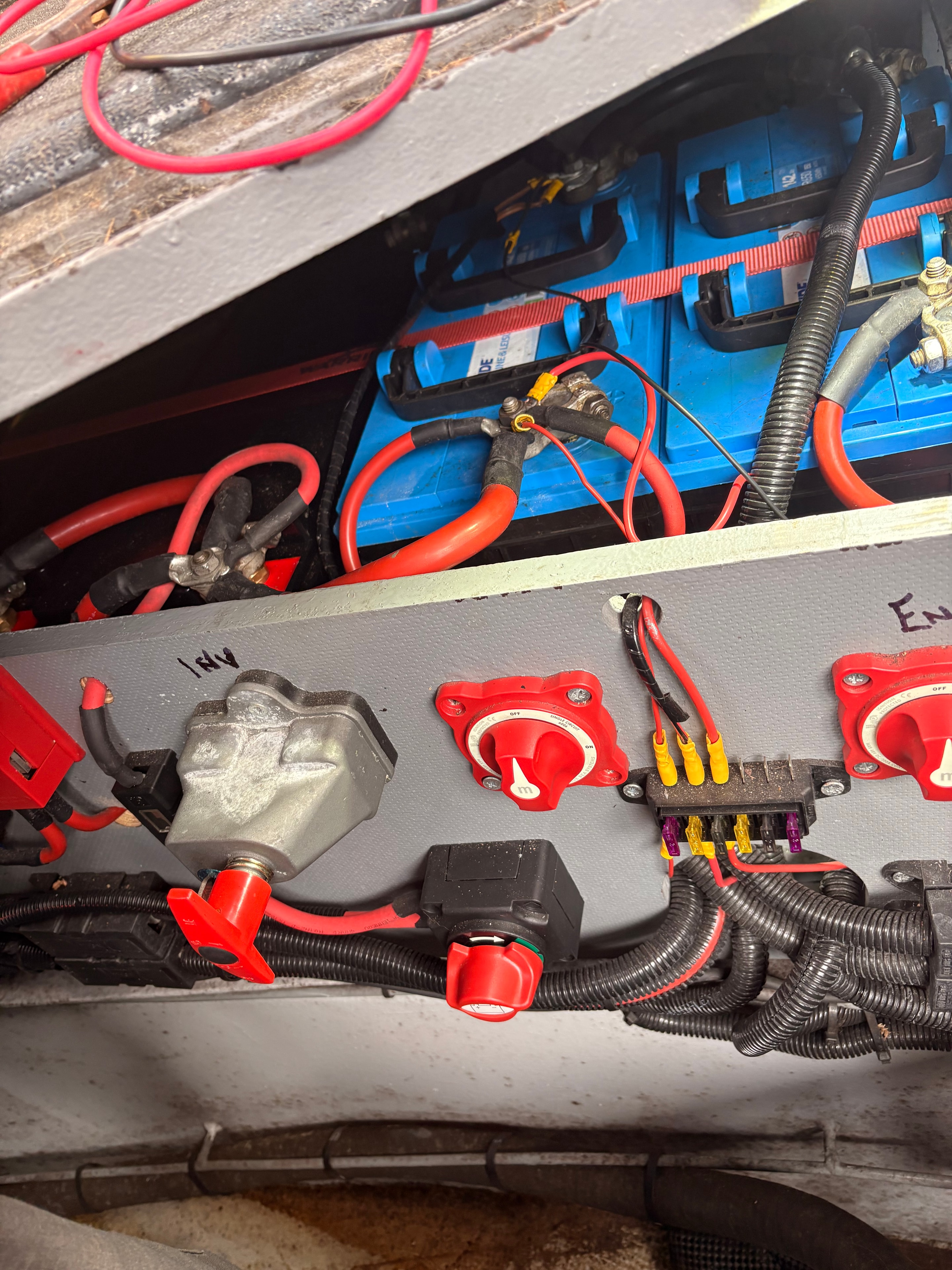
The battery compartment — tight spaces, dense wiring, and the faulty isolator switch that was blocking the solar charge path. Not the most spacious working environment, but the fault was clear once traced.
The Fix
The faulty switch was removed and replaced with a new like-for-like rotary battery isolator — the same type and rating, correctly sized for the battery bank and the current it needs to handle. Working in the confined battery compartment on a boat requires care: the connections carry significant current, the space is tight, and everything needs to be properly secured so it can't work loose with the movement of the vessel.
Once the new switch was in place and all connections were remade and checked, the solar charge path was restored. Voltage from the solar panels was confirmed flowing through to the battery bank, and the charge controller was showing the correct charging status.
The whole job — diagnosis and replacement — was done in a single visit. The boat owner left with a fully functioning solar charging system and a clear explanation of what had failed and why.
The new isolator switch installed and all connections remade. Solar charging confirmed working before leaving the boat.
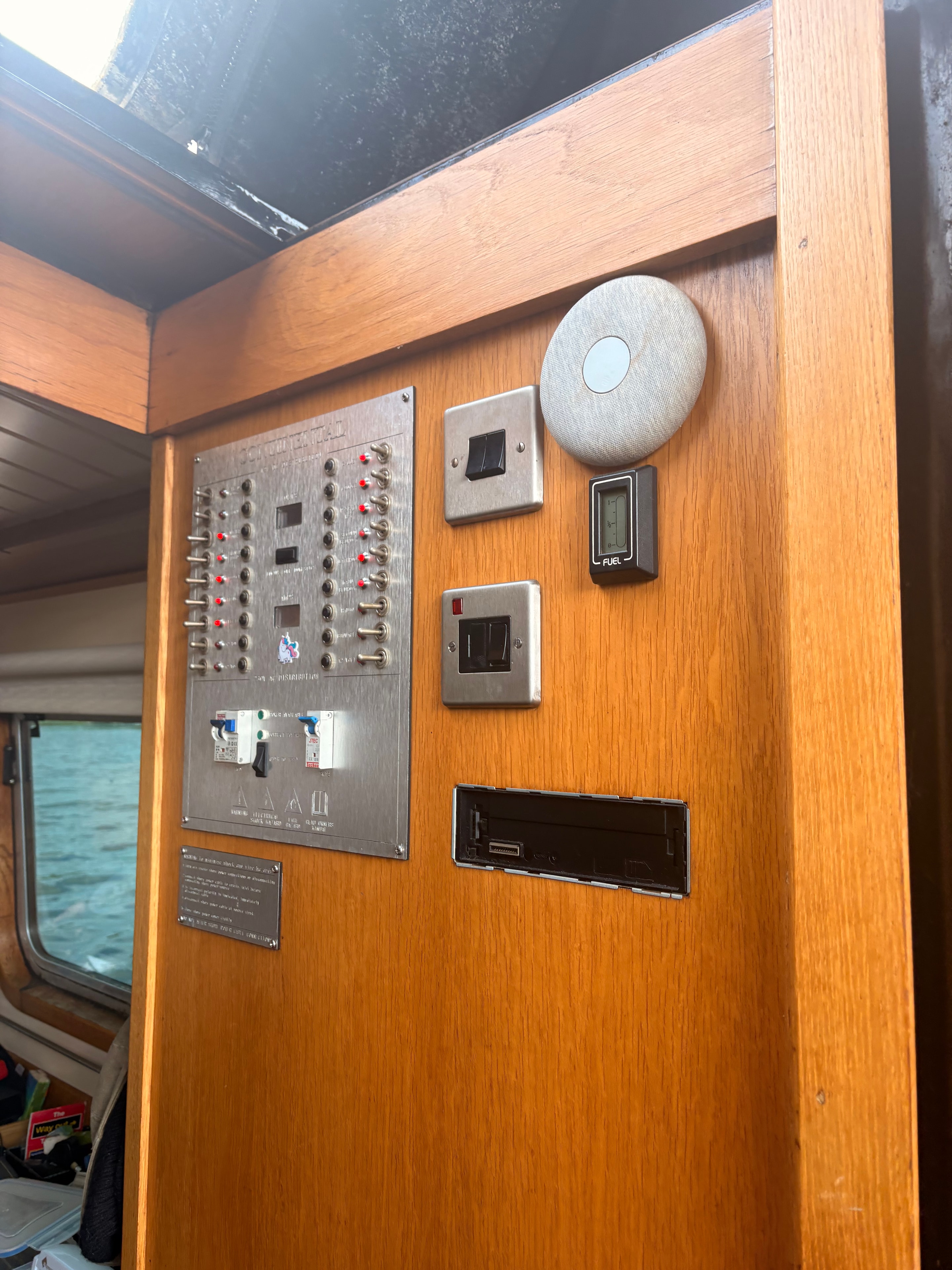
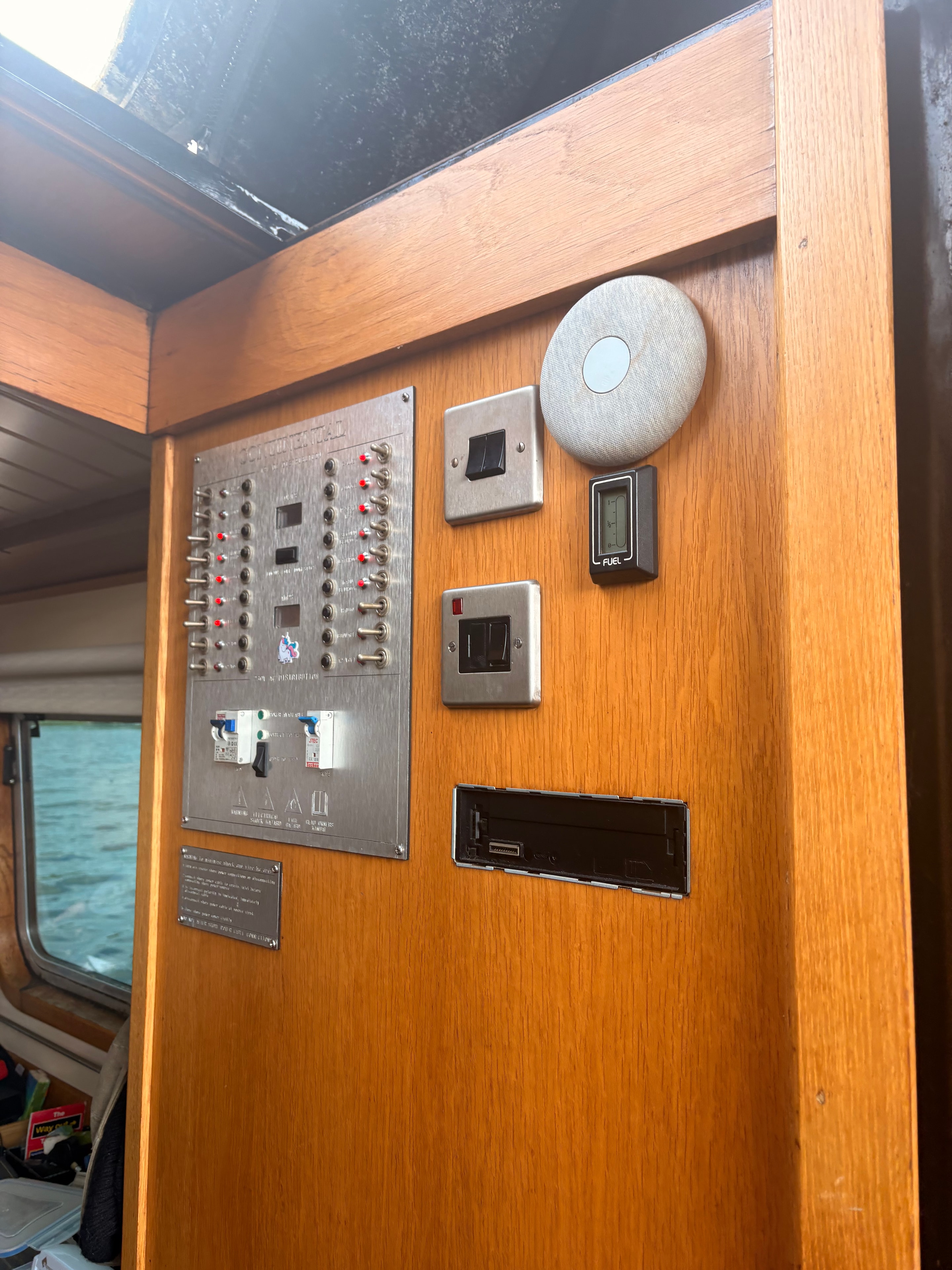
The cabin control panel — the 12V switch panel, circuit breakers and instrumentation that depend on the battery bank being properly charged. All confirmed working correctly after the repair.
Job Summary
Location
Thames Ditton Marina, Surrey
Reported fault
Solar not charging 12V battery bank
Shoreline power
Working normally — fault isolated to DC side
Root cause
Failed battery isolator switch
Fix
Faulty switch removed and replaced like-for-like
Result
Solar charging fully restored
Visits
Single visit — diagnosed and fixed same day
Why Battery Isolator Switches Fail on Boats
A battery isolator switch is one of the most important components in a boat's 12V electrical system — and one of the most overlooked when it comes to maintenance. It sits in the main DC circuit and handles everything the battery bank supplies. Over time, several factors cause them to fail:
Corrosion — the marine environment is brutal on electrical contacts. Salt air, condensation and bilge moisture all accelerate corrosion inside the switch, increasing resistance and eventually causing failure.
Mechanical wear — rotary switches have moving parts. Years of use, combined with vibration from the engine and movement of the vessel, wear the internal contacts down until they no longer make a reliable connection.
Overloading — a switch that has been repeatedly subjected to currents above its rating will degrade faster. The contacts arc and pit, reducing their ability to carry current cleanly.
Age — most marine isolator switches have a service life of around 10 years under normal conditions. Older switches should be inspected regularly and replaced proactively rather than waiting for a failure.
Intermittent faults are common — a failing switch may work fine on shoreline power (which bypasses it) but fail on the solar or battery circuit, making the fault harder to spot without proper diagnosis.
Work with Brad
Electrical Fault on Your Boat?
Brad Neil Electrical covers Thames Ditton, Walton-on-Thames, Weybridge and the surrounding Surrey area. If something's not working and you need it properly diagnosed and fixed, get in touch.