Full Storage Heater System — Government Grant, Goodmayes
A Goodmayes property received a complete storage heater system under the Great British Insulation Scheme — five heaters across multiple rooms, dedicated circuits, surface trunking throughout, and all electrical supply work. Two days on site, zero cost to the homeowner.
The Job
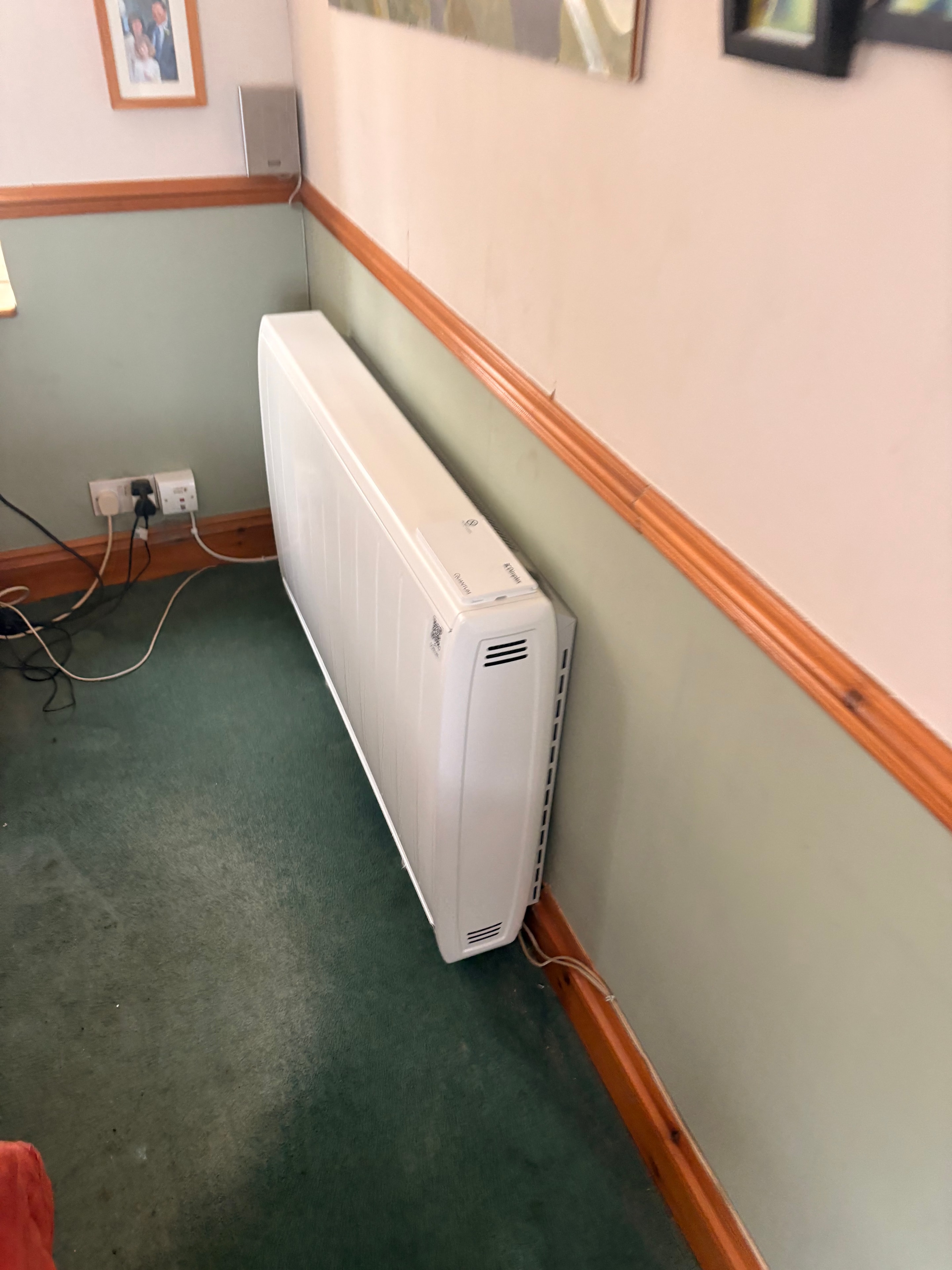
This Goodmayes property was referred through the Great British Insulation Scheme — the government grant programme that funds energy efficiency upgrades for eligible households. The brief was a full storage heater system: five heaters across the ground and first floors, all wired on dedicated circuits from a new consumer unit, with surface trunking used throughout to keep the installation clean without chasing into the walls.
The existing electrical supply needed upgrading to handle the additional load. That meant working in the meter cupboard — new consumer unit, meter tails, and all the associated supply-side work — before a single heater could go on the wall.
Two days on site. All five heaters installed, tested and commissioned. The homeowner paid nothing — the full cost was covered by the grant.
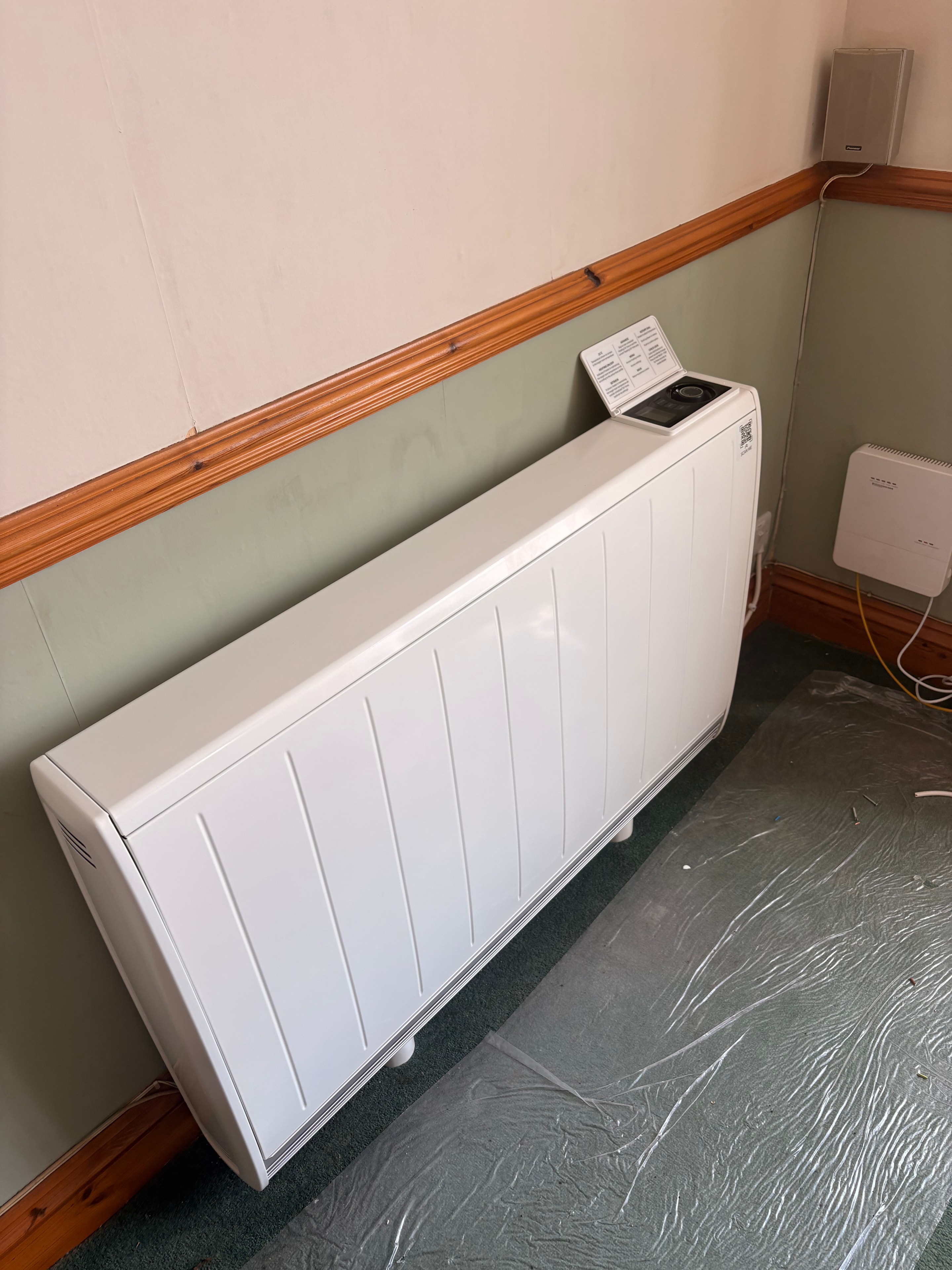
One of the five Dimplex units pre-installation — remote control attached, ready to go up. Modern storage heaters are a significant step up from the old Economy 7 units most of these properties were running.
Surface Trunking Throughout
Rather than chasing cables into the walls — which would have meant making good, replastering and redecorating across multiple rooms — the circuits were run in surface trunking. It's a cleaner solution for a property like this: the trunking sits flush against the wall and ceiling line, the cables are fully protected and accessible, and the homeowner doesn't face any redecoration work after the job is done.
Getting the trunking to sit straight and tight at every junction — particularly at ceiling and wall corners — takes time to do properly. The clips are the detail that makes the difference between a tidy finish and one that looks like an afterthought.
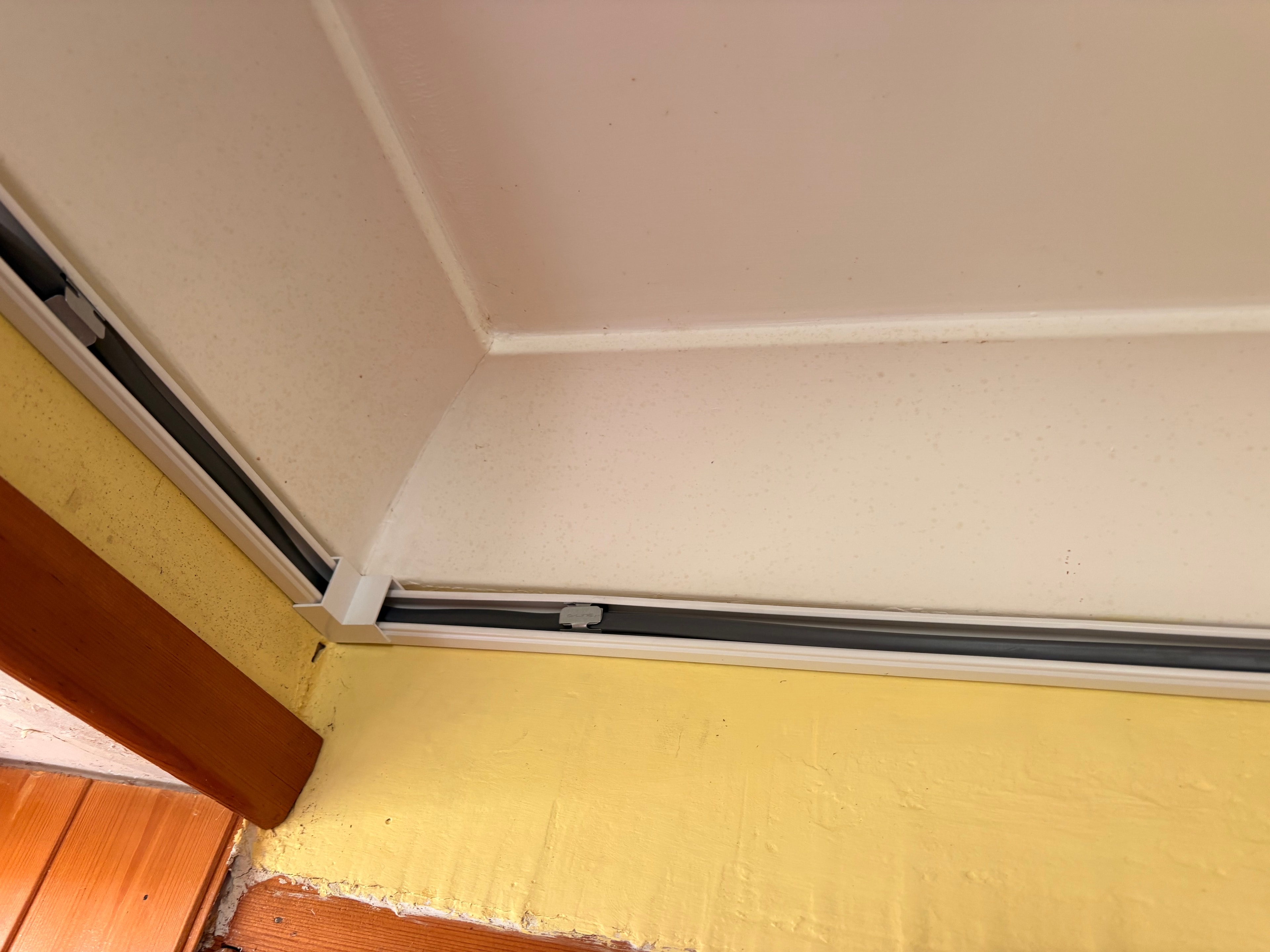
The trunking at a ceiling/wall junction — clipped tight and sitting flush. This is the kind of detail that separates a tidy installation from a rough one.
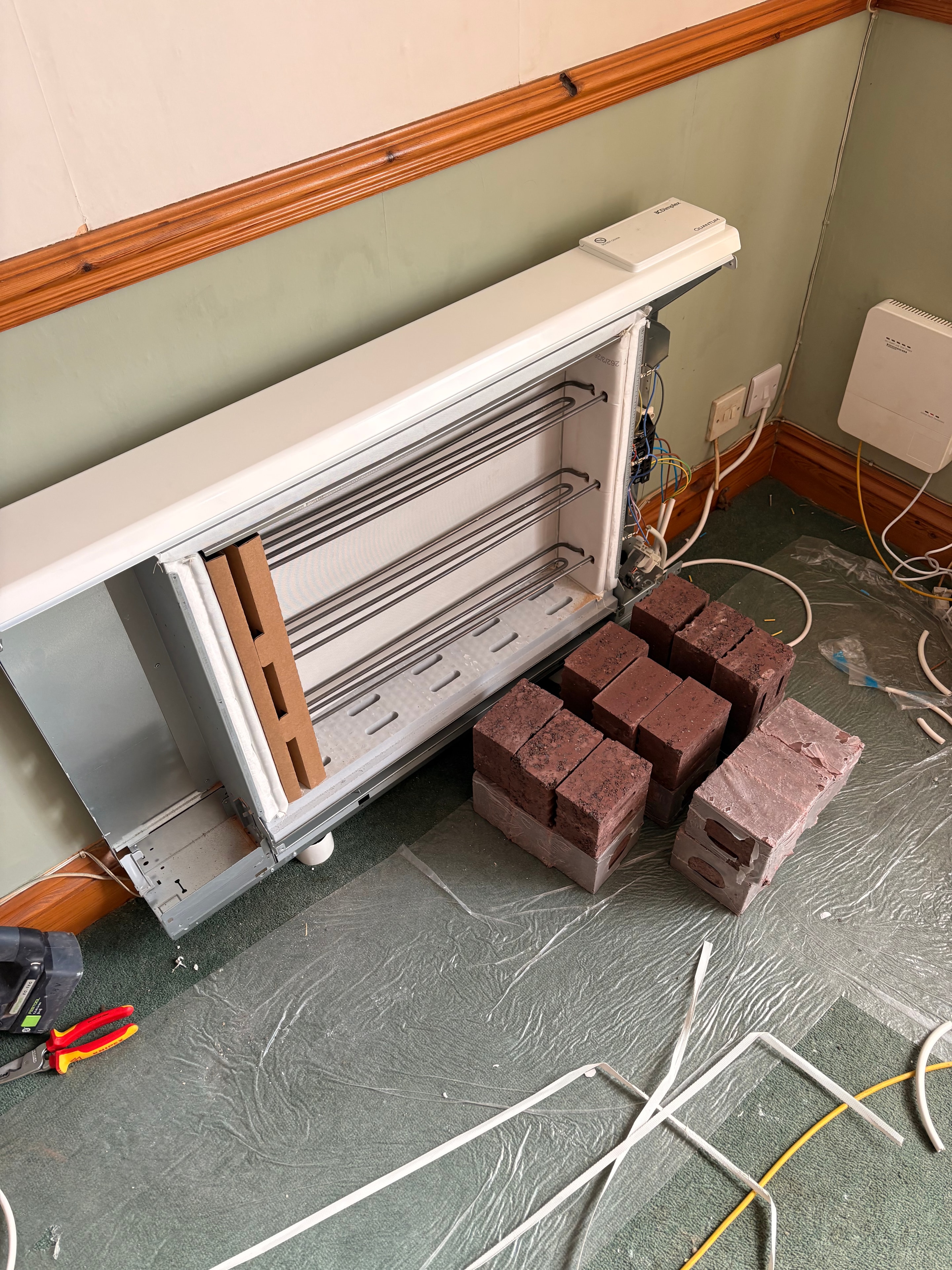
Mid-install — the heater open showing the internal heating elements and ceramic brickwork. The bricks are the thermal mass that stores heat overnight on cheap-rate electricity and releases it through the day.
Supply-Side Electrical Work
Five storage heaters on dedicated circuits represent a significant additional load on the property's electrical supply. Before any heater went on the wall, the meter cupboard needed attention — new consumer unit, updated meter tails, and all the associated supply-side work to bring the installation up to current BS 7671 standards.
This is the part of a storage heater installation that's easy to overlook but critical to get right. Overloading an existing consumer unit or running heaters off shared circuits is a fire risk. Every circuit on this job was dedicated and correctly rated.
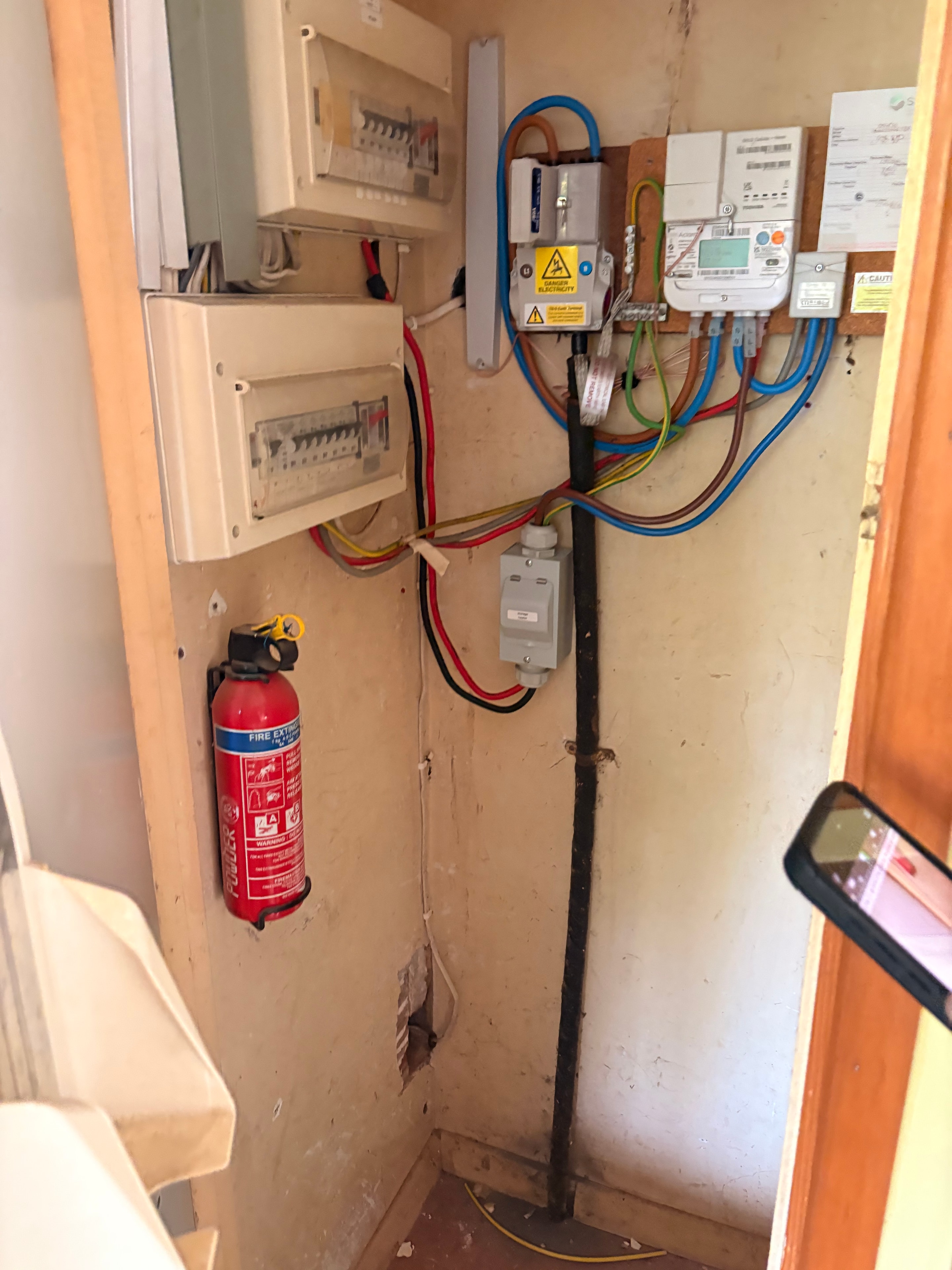
The meter cupboard — new consumer unit, meter tails and all supply-side work completed before the heaters went up. Every heater circuit is dedicated and correctly rated.
Completed Installations
Five rooms, five heaters. Each one mounted, wired, tested and commissioned. The Dimplex units fitted to this property are modern, programmable heaters — a significant upgrade on the old Economy 7 storage heaters they replaced.
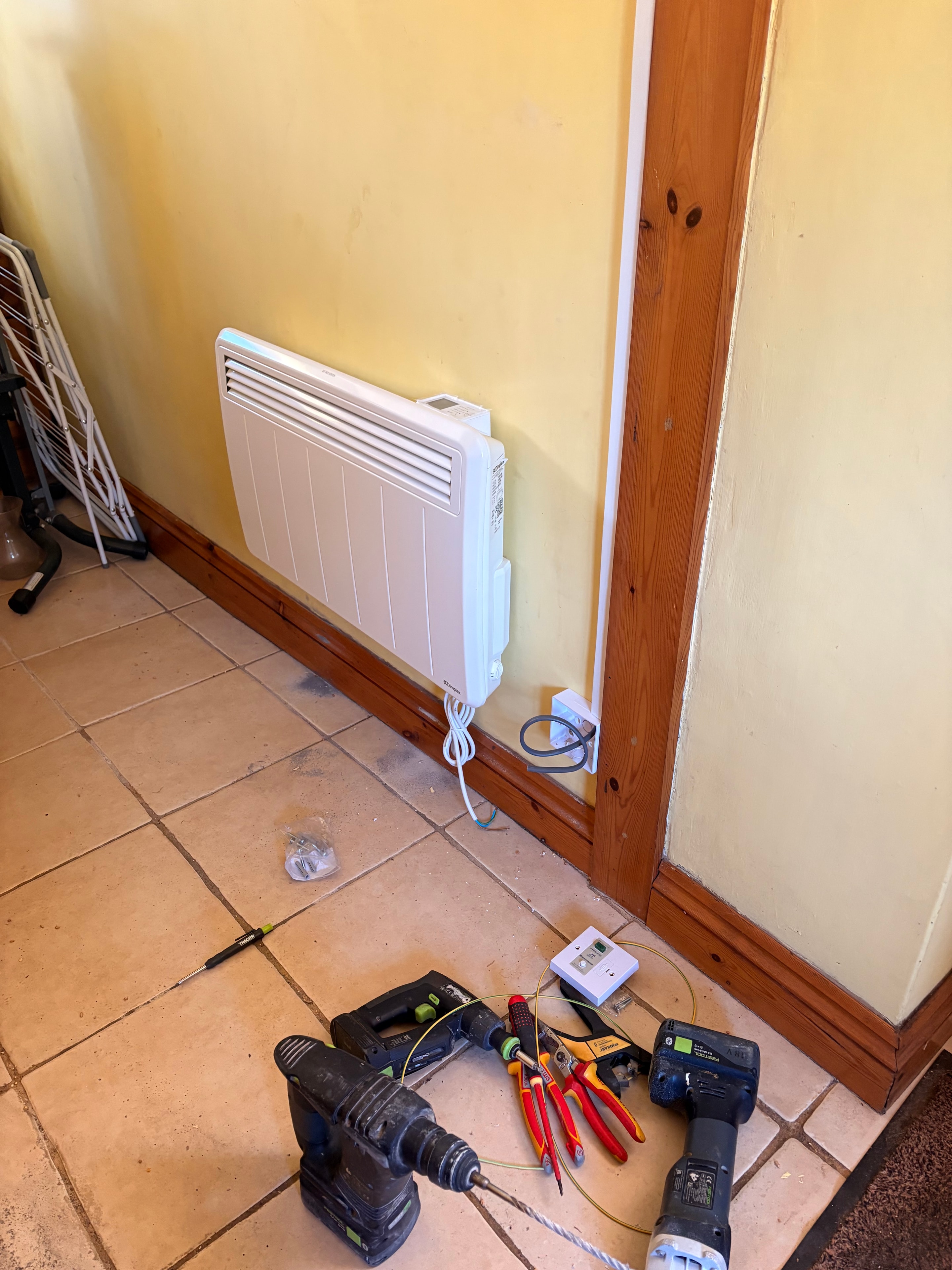
Hallway unit — installed and wired, with the spur socket visible to the right.
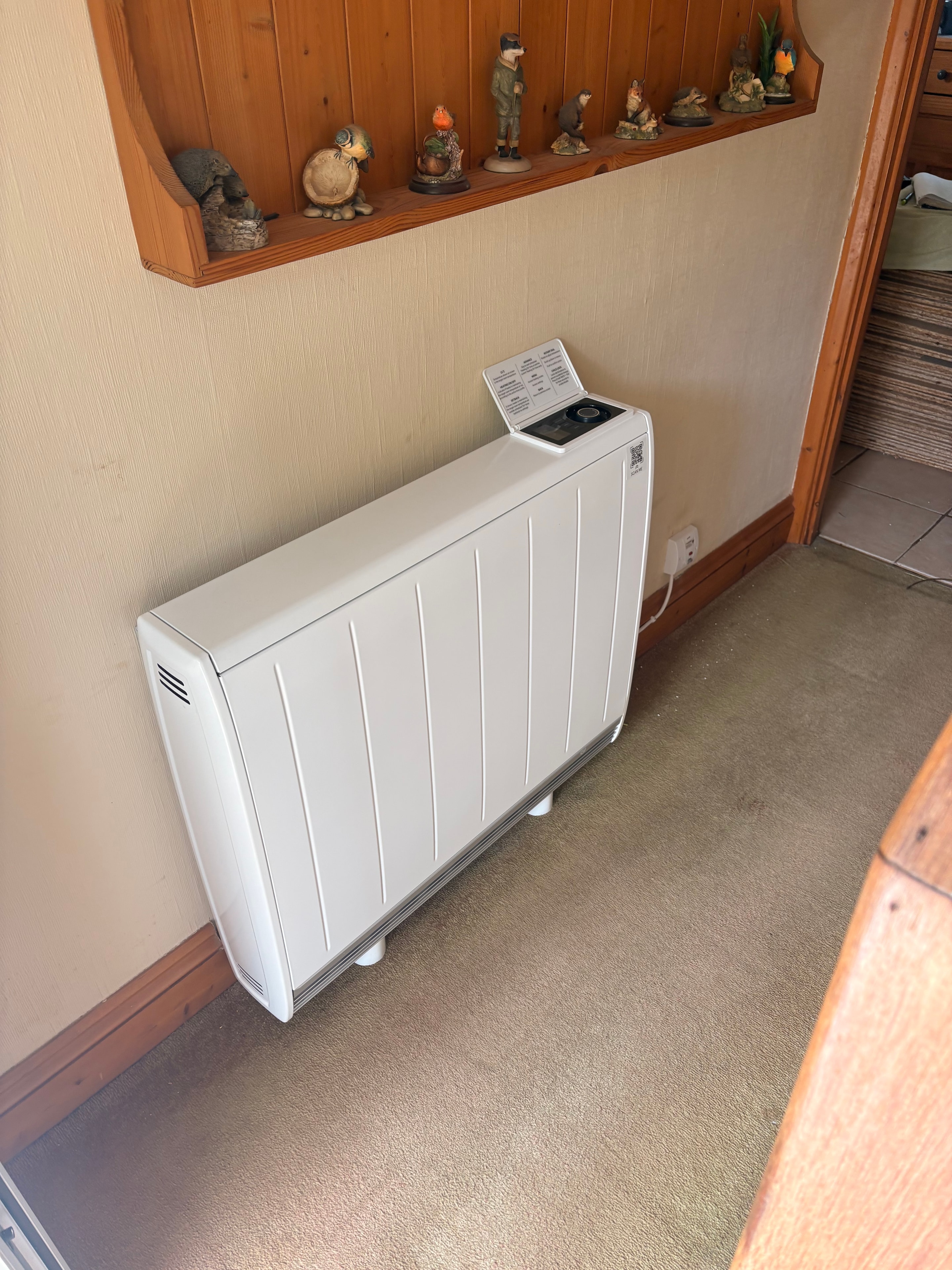
Lounge unit — mounted and commissioned. Trunking runs clean to the spur above.
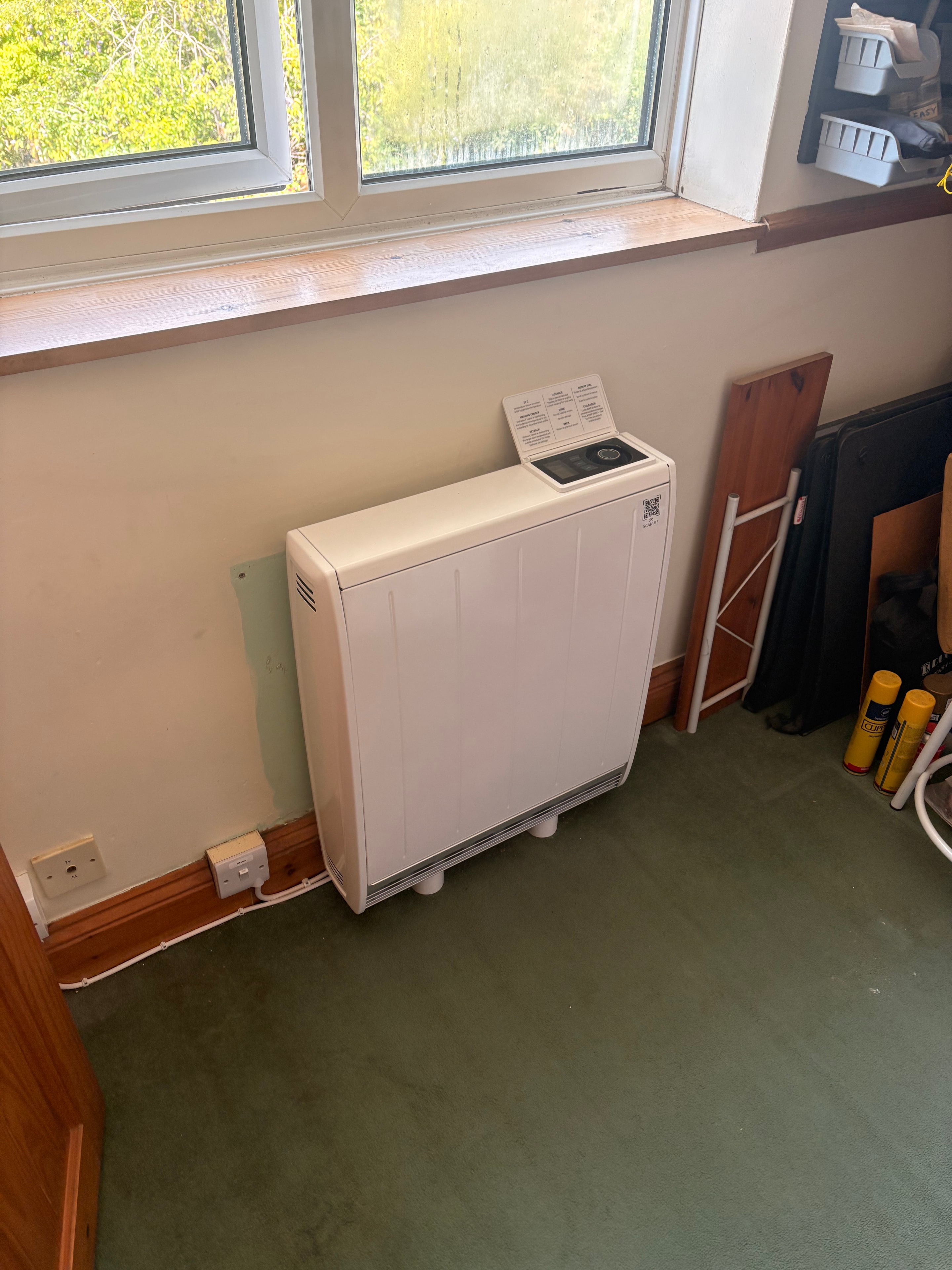
Living room unit — positioned under the window, spur socket above.
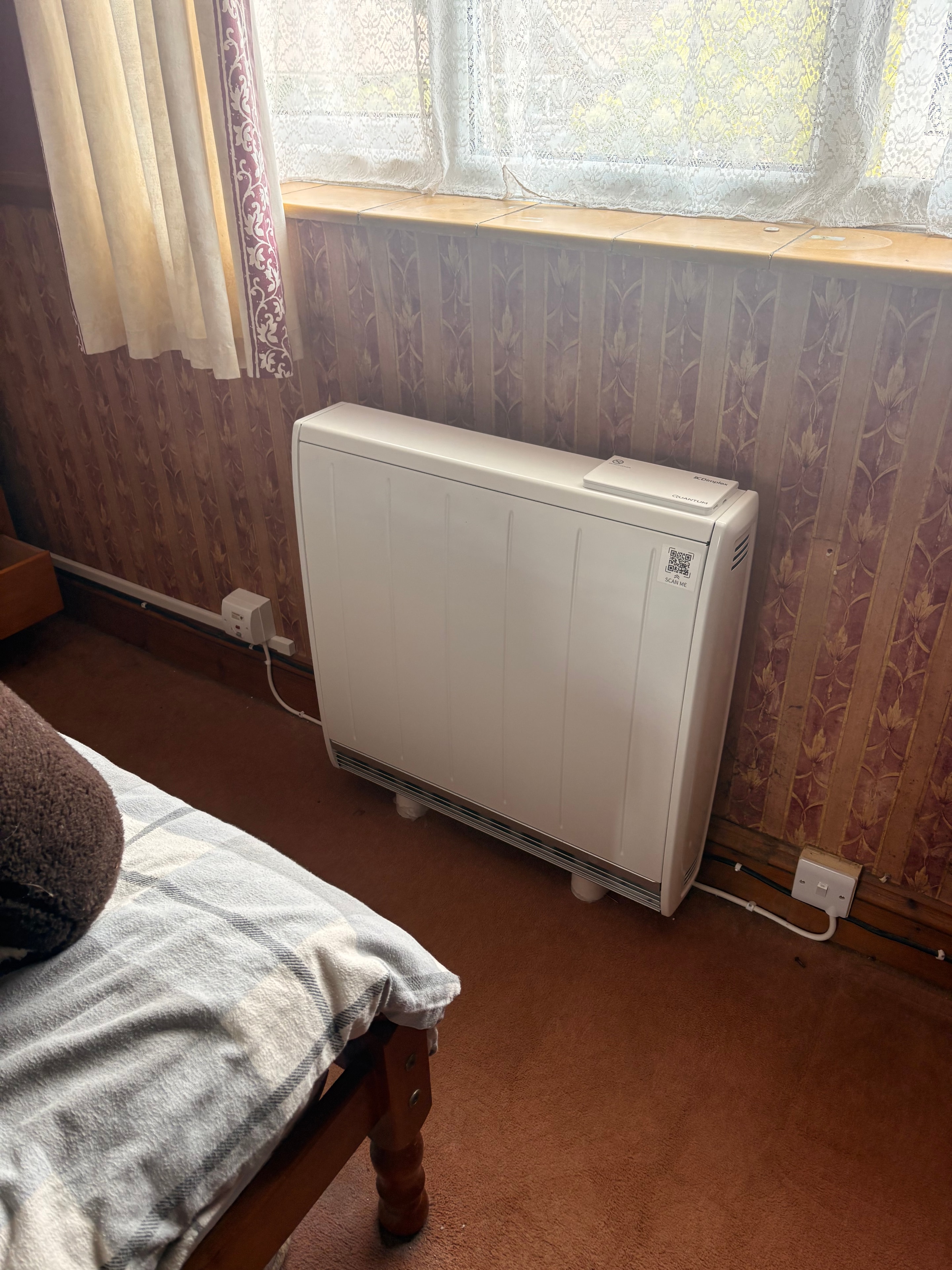
Second reception room — heater mounted and tested.
About the Great British Insulation Scheme
The Great British Insulation Scheme (GBIS) is a government-funded programme that provides free energy efficiency upgrades — including storage heater installations — to eligible households. Eligibility is based on the property's EPC rating and the household's income or benefit status.
Brad Neil Electrical works with approved scheme providers to carry out the electrical installation work. If you think your property might be eligible, get in touch and we can point you in the right direction.
Need a storage heater installation or want to find out if your property qualifies for a government grant? Get in touch.